
Is post-conservative theology the same as progressive Christianity? Exploring faith beyond simple answers
When I first heard the term ‘post-conservative theology,’ my immediate reaction was, I want that, whatever it is!
The phrase hints at what has been more widely called faith reconstruction, the process of developing a new and improved way of approaching faith for those going through faith deconstruction.
In an earlier post, Scott Rice offers a definition of faith deconstruction as a disconnect between our inherited beliefs and new experiences of doubt, pain, or injustice in the world. If this post-conservative approach to faith has to do with a body of work that would allow me to ‘skip the line’ and avoid what appears to be an arduous and time consuming process, I’m all for it!
However, as an evangelical who, admittedly, has been formed to be suspicious of any kind of change to what we believe (dare I say, heresy?) my second reaction was to wonder if it were nothing more than a rebranded version of progressive Christianity.So, what is post-conservative Christianity about? Is it the same as progressive Christianity?To get to the bottom of this question, I dig deeper into post-conservative theology in this essay and compare it to two views of progressive Christianity. From there I look at the important subtext behind this line of questioning and uncover a surprising alliance. At the end of the post I return to the question: does post-conservative theology help me ‘skip the line’ or not?
1. What is post-conservative evangelical theology?
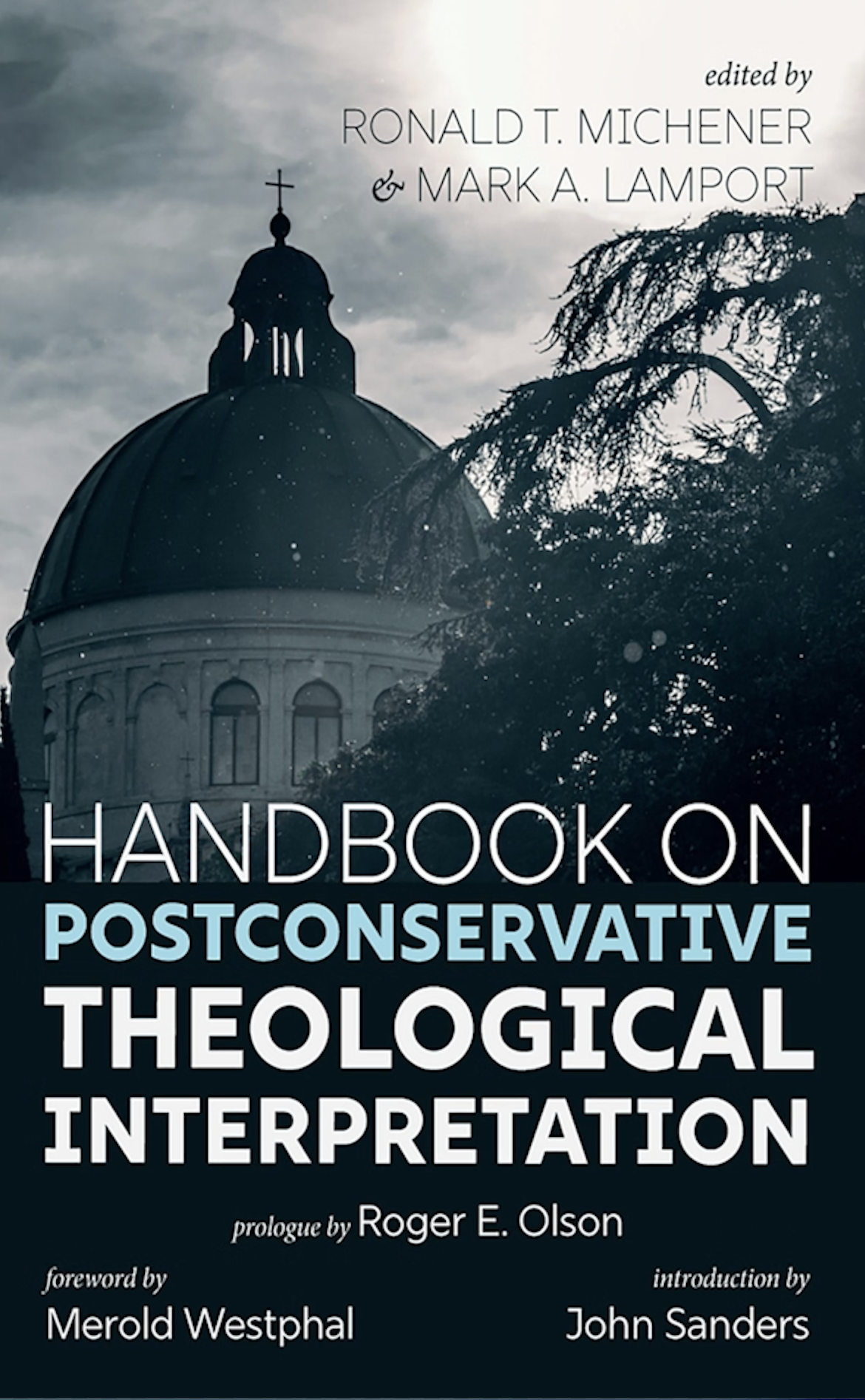
In the Handbook on Postconservative Theological Interpretation, Roger Olsen lays claim to first popularizing the term in a 1995 Christian Century article. His goal was to name and identify a budding movement at the cutting edge of evangelical thought. This movement sought to “escape the ‘left-to-right’ ‘spectrum’ of theology in which a person was either conservative or liberal” by using new insights from post-modern thinkers and others that moved away from foundationalistic models. (For our purposes, the movement away from foundationalism just meant not treating faith and theology like they were math problems with clear cut solutions.)
Returning to this idea now almost thirty years later, Olsen’s introduction in the aforementioned Handbook boils post-conservative theology down to two key ideas: First, for those who come out of conservative Christian backgrounds, it’s a way of reflecting on faith where “the constructive task of theology is never finished.” It does not treat ”traditional belief as binding… except insofar as it is faithful to God’s word.”
To me, that statement alone still seems highly compatible with evangelicalism’s long history of throwing off old forms of doing church (e.g. hymns and pipe organs) and embracing new ones (e.g. Christian rock music), all the while staying faithful to the Bible. It reminds me of a conversation I had with an elder at a conservative church who proclaimed, “The methods may change but the tried and true message stays exactly the same.”
But here’s where things really diverge.
Olsen’s second key idea addresses what staying faithful to the Bible means (or does not mean): “postconservative evangelicals do not adhere to biblical inerrancy… and would prefer to talk about the Bible as ‘perfect with respect to purpose.’” This means not only are core theological ideas potentially up for grabs (I come back to this idea in more detail later in the post), but one historically important guardrail that defines how Scripture is understood and read among large segments of conservative Protestant Christians is at risk of being redrawn. In other words, for post-conservatives, not only does the method of doing theology differ, but it’s possible that significant “tried and true” theological ideas can change as well.
2. How does post-conservative theology differ from conservative evangelical beliefs?
While a fully detailed description of post-conservative theology goes beyond the scope of this post, we can get at glimpse of what lies at the heart of it through John Sanders’s essay in the handbook on post-evangelical theology.
Sanders describes post-conservative theology in terms of what social scientists call Nurturant values. He compares these values to Authoritative ones that are more prevalent in conservative churches. Some of Sanders’s comparisons strike me as liable to caricature-making; but they are useful in creating a contrast between positions so as to offer insight into what post-conservative Christian thought is for.
At a general level, according to Sanders, Nurturants “prioritize empathy, cooperation, dialogue, perspective taking, and shared governance.” Authoritatives, on the other hand, prioritize obedience, black and white rules, absolute certainty and punishment for those who do wrong.
Sanders gives several high profile examples for how this works out in practice, starting with the limits of salvation: Authoritatives believe “(s)alvation is restricted to those who hear about and exercise trust in Jesus before they die. Since most people in history have died never really hearing about Jesus, most humans are damned in hell” according to the authoritative view. By contrast, Nurturants believe that the “spirit is working outside the confines of the church and the saving work of Jesus is applied to those who respond positively to the information they have from God.”
In terms of how God saves, Authoritatives prize the view known as penal substitutionary atonement (PSA) in which we humans break God’s rules and Jesus takes the punishment we deserve in our stead. Nurturants, by contrast, often prioritize other models, such as Christus Victor in which Jesus comes through the portal of death to rescue a humanity held captive to sin and death.
As for the doctrine of hell, Authoritatives speak of it as a place of eternal torment, while Nurturants consider it fundamentally remedial and self-prescribed. As C.S. Lewis pictured in The Great Divorce, hell is a choice we deliberately make – the doors are locked from the inside.
Finally, with respect to the Bible, Authoritatives consider it to be “the ultimate rulebook whose detailed instructions are to be followed without question.” By contrast, “Nurturants believe the Bible contains multiple points of view on many topics and sometimes there is outright disagreement between biblical writers.”
3. Is post-conservative, nurturant Christianity the same as progressive Christianity?
To answer this question we first need to clarify, what is progressive theology?
Defining progressive theology turns out to be more difficult than expected as there is no central governing ‘National Association of Progressive Christians’ to turn to. But given that the term is used widely by both its promoters as well as its detractors, I will look to both sides in an attempt to triangulate on an answer.
Keith Giles, a former conservative Southern Baptist pastor turned self-identifying progressive Christian, notes that “it’s much easier to say what Progressive Christian Theology is not than to say what it is. It’s neither monolithic or inflexible. It’s not absolute or dogmatic.” And so by contrast, it is “distinguished by its flexibility and openness to new theological ideas, beliefs and concepts.” For Giles, this flexibility is more than just how it’s defined but important to what progressive Christianity is.
Oddly enough, conservatives from the other side of the aisle agree, albeit through a negative lens. Alisa Childers, a conservative Christian singer-song writer who once dabbled in progressive Christianity but later rejected it as “an entirely different Gospel, defines it as “a movement in the church that seeks to re-interpret the Bible, re-assess historic doctrines, and re-define core tenets of the faith.”
While Keith Giles and his ilk would argue that progressive Christianity is not a different gospel, but in fact a more faithful version of the Christian message of the good news of Jesus, he and Childers do fundamentally agree that the heart of progressive Christianity is characterized by its posture of openness. As Giles says, progressive Christianity is about “a generous tolerance for a variety of doctrinal and theological views.”
If we then compare the post-conservative movement’s “reformed and always reforming” ethos with the progressive Christian’s “openness to new theological ideas,” we discover a deep resonance and even underlying commonality in their outlook on faith, theology and what it means to believe.
What complicates this alliance, however, is the fact that post-conservative theology nevertheless retains an essential similarity to conservative evangelicalism. Let’s take a look!
4. How are post-conservative Christians still in alignment with conservative Christians?
Roger Olsen, the theologian who first coined the term post-conservative, recently published a book subtitled “Putting the brakes on Progressive Christianity” (2022). Olsen says that his intention was to write the 21st century version of J. Gresham Machen’s Christianity and Liberalism, which argued that the “liberal Christianity of his day was not even authentic Christianity but a different religion.” (Machen was a key figure in early 20th century American Christianity who played an important part in what would come to be known as the fundamentalist-modernist controversy.)
This move from Olsen is surprising and somewhat disorienting. Post-conservative theology is an intentional break from conservative theology (hence the word ‘post-’), and, as I just showed, it aligns in some strong ways with the approach of progressive Christianity.
How is it that Olsen is sounding an alarm that echoes the conservative Alisa Childers’s criticism of progressive Christianity, and so distancing himself from the very movement that appears poised to embrace him? What’s going on?
Unpacking this seeming contradiction first starts with discovering that post-conservative Christians still have certain ‘conservative’ core commitments beyond their more ‘progressive’ openness to change. For example, post-conservative Christians are likely to hold to the elements that have come to define the theology of evangelicalism, namely, Bebbington’s quadrilateral: a high view of the Bible’s authority and a way of centering Jesus’s atoning work on the cross, the personal conversion experience, and a Spirit-filled life that manifests itself in action).
Post-conservatives are more open to altering what some of these core commitments look like, but they still provide areas of clear positive affirmations for faith and belief. Whether it be the above four areas or other affirmations such as the Nicene Creed, post-conservatives have real theological boundaries that put the brakes on, so to speak, going where both conservatives and evangelical Christians fear.
We turn to that fear now.
5. What are post-conservatives so afraid of?
A key fear for Roger Olsen and many post-conservative Christians is that progressive Christianity too easily takes one down a trail that leads to something unrecognizably Christian. In other words, for Olsen and others, the concern is that with enough changes (reforms) to core theological commitments, even a series of tiny movements away from our theological roots, can ultimately result in a version of Christian faith that has lost its essential content – that has become completely secularized.
For many conservative, evangelical Christians, this is the critical subtext behind the question of this post. It’s also a concern that drives much of my current theological inquiry (so much so that the question of "Does an adaptive theology lead to the loss of what is essential to Christian faith and theology? And if so, when and how does this happen?” is something I plan to explore further in a later post. Stay tuned!).
6. Do post-conservative concerns around secularization make them not progressive?
If post-conservative theology fears some potential outcomes of progressive Christianity, that would suggest that the former is not identical to the latter. And yet, as discussed at length above, the ‘post’ in post-conservative has a genuine resonance with progressive Christianity.
So which one is it? Are they the same or are they not the same?
Or are post-conservatives simply a partially conflicted lot living in an unstable paradoxical world?
Well, as it turns out, sort of!
Post-conservatives, like progressives, have found the foundationalistic approach, defined by features like certainty and hyper-rationality, to be wanting. At the same time, the problem of a faith that might forgo its core theological commitments and so become overly secularized, as some progressives have done, I believe, is all too real for this group.
It’s an admittedly unstable position. But then again, a stable unchanging theology, conservative or progressive, in the face of a living God seems like a losing proposition. We’ve had light hearted conversations at Theology Lab about something called process theology that I like very much. I won’t go into that here, but there’s a way that a theology-in-motion, a theology that isn’t afraid of change but that’s also centered in what it believes about God as revealed to us in Jesus Christ speaks to the way (the process) in which theology must be formed: not a static set of propositions set on paper, but a dynamic conversation with God and one another carried out in community.
Post-conservative theology isn’t just a set of ideas, but also the method through which those ideas are continuously formed.
So, is post-conservative Christian theology the same as progressive theology? To answer this question, we have to say two things at once: Yes, it’s the same in its Nurturant posture and, for example, its willingness to reconsider how our theological traditions apply today. But at the same, no, it’s not the same in the way that it holds to (and does theological reflection from in light of) its specific core and enduring doctrinal or theological beliefs.
7. Does this movement allow me to skip the hard work of faith deconstruction and reconstruction?
One final question! I have to come back to my previously mentioned (tongue-in-cheek) desire that post-conservative Christian theology might help me ‘skip the line’ and find answers to my big questions without having to do the work. Alas, it doesn’t! But it can help!
As Maryanne Atkinson shared in her Theology Lab post, the work of faith deconstruction and reconstruction can be a long process that takes time, energy, and emotional investment. Fortunately, the many remarkable people in the post-conservative movement already have done important theological reflection.
I’m not sure I’d recommended that all the readers of this post go out and read the Handbook on Postconservative Theological Interpretation (it’s a tome!). That’s not so much needed. But, many of the contributors to this volume can be found on more accessible podcasts and blogs or have sermons available online. A few of them have been guests at Theology Lab, like Greg Boyd, Pete Enns, and Jonathan Tran.
More to the point, though, the movement also requires that everyone participates in the ongoing development of doing theology. Put simply, there’s no skipping the line.
Yes, it’s true. But as much as this disappoints me, the better part of me is grateful for the opportunity to be a participant in the formation of a theology that is “reformed and always reforming.” I’m also interested in the fruitful challenges this unstable position raises, and how I might continue to grow in a faith that’s committed to core beliefs and has openness to change and new questions.
I’m eager to see how these dynamics exist alongside one another, especially with others in the Theology Lab community.
If you enjoyed this post, you might be interested in these Theology Lab episodes:
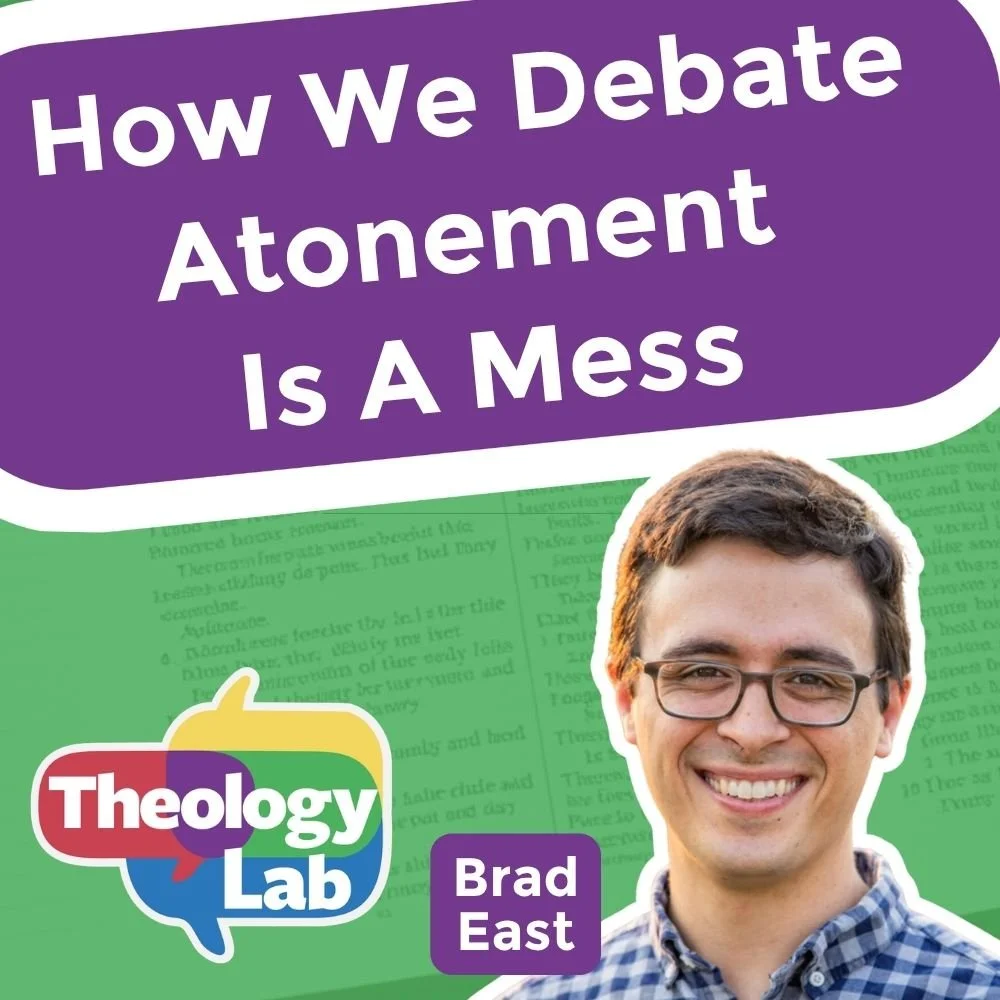
Brad East discusses the current debates on penal substitutionary atonement. Check out the episode page here.

Beyond Simple Answers. Theology Lab’s ongoing series on searching for a theological vision when simple answers aren’t enough. Check out the episode page here.