What Is Womanist Theology: Dr. M. Shawn Copeland
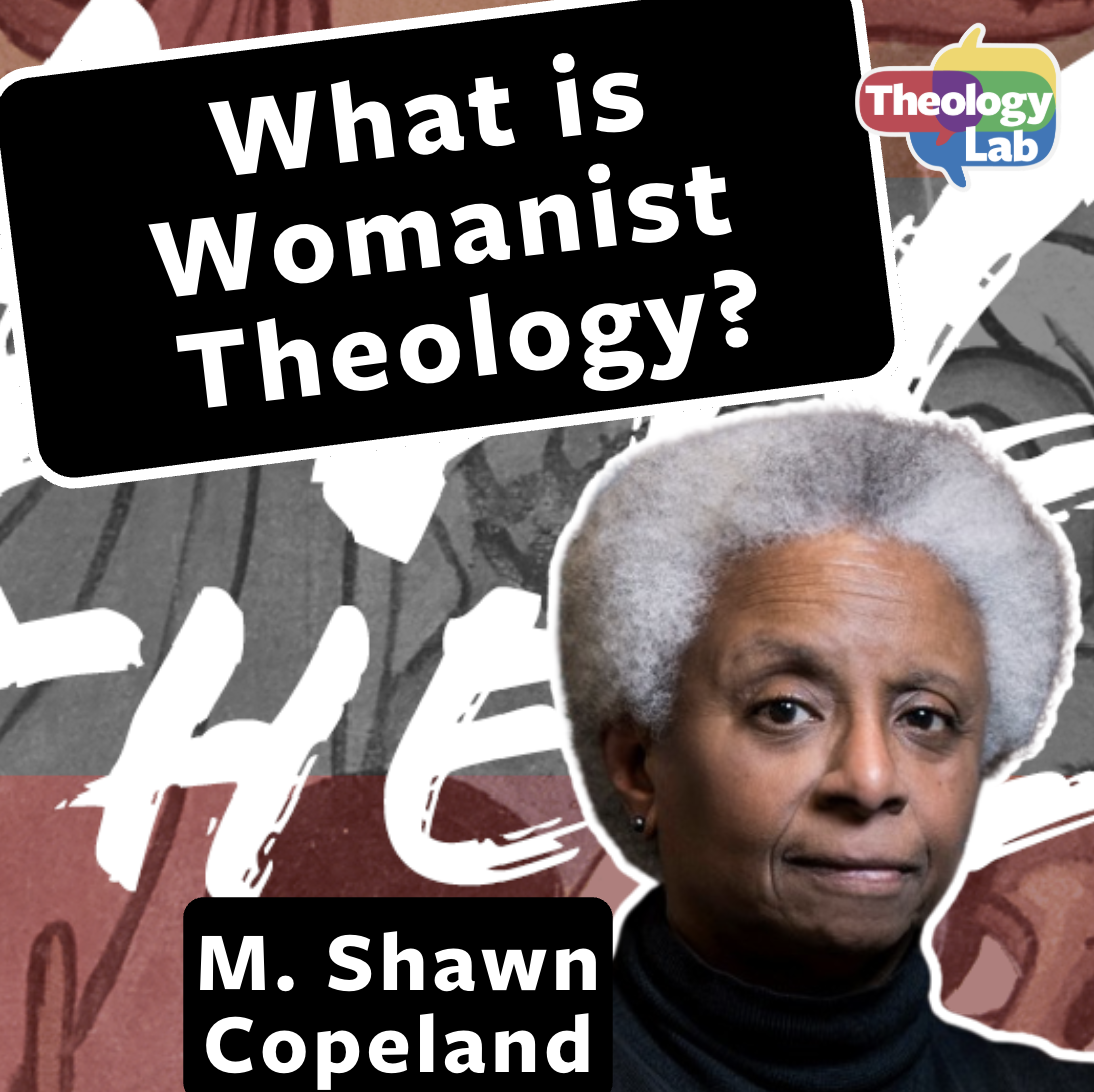
⭐ This theology related video explores how Womanist theology emerges. It is part of Highrock's Black theology course, featuring Prof. M. Shawn Copeland. This video dives deep into how faith, Scripture, and theology speak to the lived experiences of Black women, addressing themes of justice, liberation, and resilience. Rooted in Black theology and African American faith traditions, Womanist Theology centers the voices of Black women in the fight for equality within both the church and society. How does the Bible inform this movement? What role does Christian faith play in the pursuit of justice and wholeness? Perfect for those studying the Bible, African American theology, and Black women's faith, this video unpacks transformative theological perspectives.
Description
This theology related video explores how Womanist theology emerges. It is part of Highrock's Black theology course, featuring Prof. M. Shawn Copeland. This video dives deep into how faith, Scripture, and theology speak to the lived experiences of Black women, addressing themes of justice, liberation, and resilience. Rooted in Black theology and African American faith traditions, Womanist Theology centers the voices of Black women in the fight for equality within both the church and society. How does the Bible inform this movement? What role does Christian faith play in the pursuit of justice and wholeness? Perfect for those studying the Bible, African American theology, and Black women's faith, this video unpacks transformative theological perspectives.
Resources
Generated Transcript
Scott Rice (00:11.566)
The womanist refers to a perspective or approach in theology, ethics, biblical studies, or religious studies that focuses on the distinct or differentiated experience of African American women. To put it differently, to ask whose experience counts in theological reflection or pastoral care, womanist thinkers insist that the religious
historical, cultural, social, that includes political, economic, technological, psychological, personal, and embodied experiences of African American women matter. This talk first traces the origin of the term womanist, then describes womanist scholarship and theology, and finally presents some debates
in womanist religious scholarship and introduces some womanist thinkers.
Scott Rice (01:18.624)
In an essay in the 1970 groundbreaking collection, The Black Woman and Anthology, Frances Beale challenged the notion that feminism was the exclusive domain of white women and pinpointed black women's double jeopardy through racial and gender oppression, as well as the failure of white feminists to address racism and imperialism.
Not long after Beale's essay, doctoral students Jacqueline Grant, Dolores Williams, and Katie Geneva Cannon at Union Theological Seminary in New York began to enlarge Beale's analysis to include the exclusion and marginalization of African-American women's experiences and perspectives within academic religious discourse, within black male and
white feminist theologies, within the black church.
Novelist and essayist Alice Walker coined the term womanist in her 1983 collection, In Search of Our Mother's Gardens. She retrieved and derived the word from the black folk expression of mothers to female children, you acting womanish. In other words, the mother is admonishing the little girl that she's trying to act like a grown woman.
Walker extended the meaning of womanist to indicate being responsible, being in charge, being serious. At the same time, she stated the word womanist indicates a Black feminist or feminist of color.
Scott Rice (03:06.435)
Thus, Walker's definition affirmed earlier emancipatory and liberating work by thinkers and activists such as Maria Stewart, Anna Julia Cooper, and Ida B. Wells. Walker's developed definition explicitly encouraged Black women to embrace and to love their embodied selves in the midst of cognitive, religious, aesthetic, and social contexts
that too frequently prove to be hostile to their intellectual and cultural creativity, their spirituality and moral agency, their emotionality and sexuality.
Scott Rice (03:52.321)
Energized by Walker's work and in order to distinguish their effort from those of African-American male theologians and white female theologians, Grant, Williams, and Cannon named their approach womanist and charted a course to take Black women's experiences as material worthy of theological analysis and reflection. Methodologically,
these scholars argued that paying close and sharp attention to differentiation of experience was necessary for intellectually sound, pastorally adequate, and ethically responsible theological reflection. Black women religious scholars turned this definition into a kind of manifesto through which to deepen awareness of the ideology and practice of sexism within the black community,
and to expose uncritical complicity in distorted societal and church structures.
Scott Rice (05:01.517)
Rather than a school, womanist thinkers form a movement, now in its third generation, of multiple voices, cultures, theistic, including Muslim and Christian, and non-theistic, humanist perspectives, and commitments in order to shed light on the interstructuring of oppressions that affect and distort all people.
Perhaps because of the specificity of their point of departure, these scholars share a fundamental practical intellectual commitment to advocate for the survival and wholeness of an entire people, and therefore refuse to set black women over and against black men. At the same time, debates have emerged among black women religious scholars about the meaning and appropriation of the term womanist.
By explicitly including feminists of color and recognizing the universal character of spirituality, Walker's definition made space for the criticism raised by Muslim scholar Deborah Majid of the unintentionally overweening Christian orientation of some womanists and the unintentional tendency to overlook non-Christian womanists and traditions. Monica Coleman's
2006 lead article for a roundtable discussion in the Journal of Feminist Studies in Religion provides a useful benchmark in charting new developments in womanist scholarship. Coleman queried both the content and the appropriation and imposition of the term womanist. Seven scholars responded, some self-identifying as womanist and some not.
Coleman challenged womanists to focus on the theological, spiritual, and religious experiences of Black lesbian and gay men, to contest homophobia, and to address social problems more directly. These issues were raised earlier by second-generation womanist scholars, including Karen Baker Fletcher of Southern Methodist University's Perkins School of Theology, Kelly Brown Douglas,
Scott Rice (07:25.92)
now Dean of the Episcopal Divinity School at Union Theological Seminary, Cheryl Townsend-Jilks of Colby College, Cheryl Kirk Dugan of Shaw University, and Marcia Riggs of Columbia Theological Seminary. Notwithstanding these links with the work of earlier scholars, Coleman's critique of the indiscriminate use of the term womanist, of Christocentrism, and of
over identification with the Black church point to the concerns of third wave womanists. Coleman argues that the success of first and second generation scholars ironically has made womanist identity almost a requirement. Despite academic training and specialization, all Black women scholars now face being labeled as womanist. Such an easy imposition
dilutes and commodifies the meaning of womanists. Not all third wave scholars have abandoned academic study of Christianity, but their cohort has enlarged and enriched womanist thought by engaging Islam, indigenous African and Caribbean religions. These scholars include Stacy Floyd Thomas, Raquel St. Clair and Lynn Westfield.
They deploy interdisciplinary methods to interrogate suffering, praxis, the Black body, and sexuality. Womanist thought has proved remarkably generative in confronting the biased ways in which Black women have been and are perceived not only in white, but Black religious, cultural, social, and interpersonal contexts. Analysis of the interlocking and mutually conditioning forces of sexism
acquisitive materialism, homophobia, and anti-black racism characterized the core of womanist thought. Its future lies in black women's critical capacity for wonder, intellectual rigor, interdisciplinary openness, self-critique, and self-love. Hey, it's Scott here. Thanks for watching this Theology Lab video.
Scott Rice (09:45.263)
If you're enjoying it, you can subscribe to the channel below and you'll get more theology lab videos as soon as they're released.
Of this, the first generation of womanist scholars, Katie Geneva Cannon, Dolores Williams, and Emily Towns have been the most prolific. Religious faith, as critically and humbly open to the deepest concerns of human living, provides both the stimulus for their works and the objective. In Black womanist ethics, Cannon breaks with the methods and content
of conventional Christian and secular ethics. The analysis outlines the historical situations during which Black women are challenged to sustain dignity and live moral lives. Chattel slavery, legalized discrimination and segregation from the post-emancipation period up to the contemporary era, reinscribe racial dichotomies and power dynamics.
to black women's detriment. Still in this murky historical and social context, black women live the promise of possibility. This conclusion is grounded in the black women's literary tradition, particularly the life and work of Zora Neale Hurston and the theologies of Howard Thurman and Martin Luther King Jr. as resources for a constructive ethic. From her study of Hurston's life and work,
Cannon discerns three virtues, unshouted courage, invisible dignity, and quiet grace. In order to articulate the role of religious experience in ethical and moral responsibility, Cannon turned to Howard Thurman, who roots social action in the conscious and direct exposure of the individual to God. Thus, in Cannon's constructive ethic, Hurston's virtues are coupled with
Scott Rice (11:50.284)
mystical experience with God in order to provide resources which order, focus, and define precepts and actions which can be used to transform social and political structures that denigrate and inhibit the realization of wholeness that God brings to all life. Dolores Williams attends to the role religion plays in Black women's social oppression
and their confidence in the immediacy of God's presence and promise of help. Black women, she maintains, insist God helped them to make a way out of no way. And indeed, they believe God is involved not only in their survival struggle, but that God also supports their struggle for quality of life.
Williams works out this folk aphorism, God can make a way out of no way. She works this out theologically by locating the biblical figure of Hagar at the center of her statement of womanist theology. The story of the slave of African descent pressed into surrogacy by Abraham, then brutalized by the mistress Sarah, ravaged the master forced into exile
and threatened with certain death in the wilderness functions as a quote, root to black women's issues, close quote, of contemporary social oppression, forced motherhood, homelessness, single motherhood, poverty, and struggle for survival. Moreover, this analogy telescopes African-American history, especially African-American women's history. This is no mere analogy.
This interpretation explains, writes New Testament scholar Alan Callahan, why, quote, as modernity's most thoroughly humiliated people, African-Americans have taken the texts of the Bible so eagerly and earnestly, close quote. At the same time, Williams discerns at least two traditions of African-American biblical interpretation. One emphasized the activity and agency of men. She named this deliberation
Scott Rice (14:10.625)
of African-American biblical appropriation. The other focused on the activity and agency of women. She named this the survival quality of life tradition of African-American biblical appropriation. For Williams, then, religious experience adverts to a survival quality of life encounter with God. Quote, in the context of much black American religious faith,
Survival, struggle, and quality of life struggle are inseparable and are associated with God's presence with the community." In her Womanist Ethics and the Cultural Production of Evil, Emily Towns levels a trenchant critique of the ideological subversion of human wholeness. Here, Towns demonstrates this.
through uncovering the ideological in the interaction of history, memory, and culture. She advances the notion of, the fantastic hegemonic imagination, close quote. This is a complex of ideas put forth by dominant groups in a society and positioned to secure the rule of subordinate peoples or classes. She writes, quote,
The fantastic hegemonic imagination traffics in people's lives that are caricatured or pillaged so that the imagination that creates the fantastic can control the world in its own image. This imagination conjures up worlds and their social structures that are not based on supernatural events and phantasms, but on the ordinariness of evil."
Through saturating popular culture with blatant misrepresentations and negative stereotypical images, for example, the mammy figure, the matriarch as bad mother, the welfare mother, the Jezebel or whore, dominant groups disguise truth, seduce our consent, and maintain control. Moreover, the cultural production of evil deforms all of us.
Scott Rice (16:34.639)
Towns challenges religious faith. Unless it resists complicity with the dominant political powers, religion will become empty, useless, quote, an opiate and not a source of transformation, close quote.
Towns and other womanist scholars challenge all of us as believers. We must not conform ourselves to the powers and principalities of this world, but seek and follow the way that Jesus teaches so that we are transformed into his image for one another by the power of the Spirit.