The Bible and BLM in a Time of Cultural Backlash: Dennis Edwards & Lisa Bowens
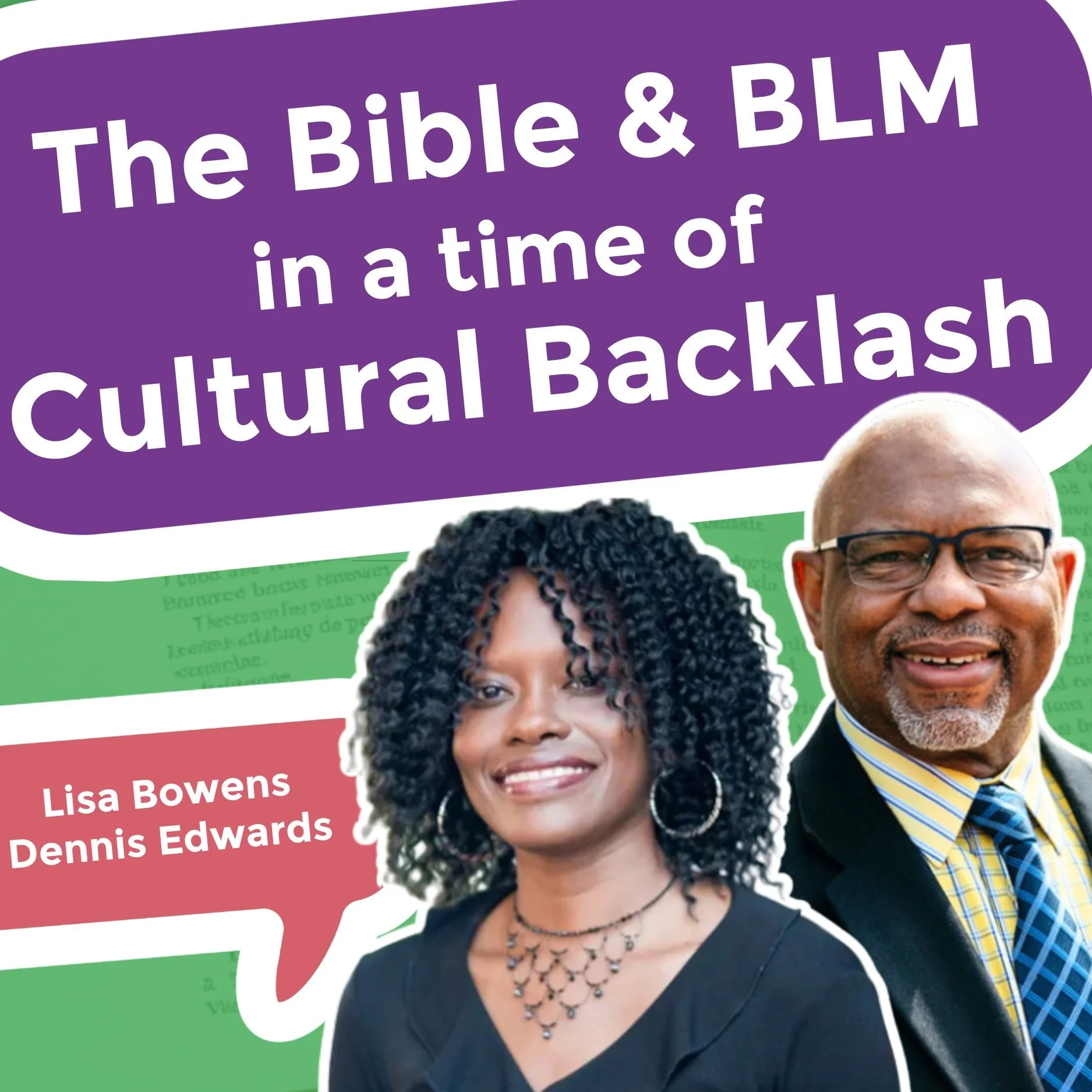
⭐ In this Theology Lab interview, we’re joined by Dennis Edwards (North Park Seminary) and Lisa Bowens (Princeton Seminary), editors of Do Black Lives Matter?, for a thoughtful conversation at the intersection of Scripture, faith, and contemporary social movements.
Together, we explore how the Bible has been read—and misread—in discussions surrounding the Black Lives Matter movement, and what faithful interpretation looks like in moments of cultural tension and resistance.
Edwards and Bowens reflect on the role of biblical theology in addressing injustice, the church’s public witness, and the growing pushback against efforts aimed at equity and inclusion in public life.
This episode invites listeners to engage Scripture seriously, wrestle honestly with hard questions, and consider how Christian faith speaks into today’s contested cultural landscape.
Listen Now
Description
In this deeply thoughtful episode of, Scott Rice sit down with Dennis Edwards (Dean and Vice President at North Park Theological Seminary) and Lisa Bowens (Associate Professor of New Testament at Princeton Theological Seminary), co-editors of Do Black Lives Matter?: How Christian Scriptures Speak to Black Empowerment. Together they explore how Scripture has been interpreted—often both faithfully and painfully—within the context of racial justice movements like Black Lives Matter, especially amid rising cultural backlash and polarized public discourse.
Edwards and Bowens trace the complex history of biblical interpretation, showing how the Bible has at times been misused to justify systems of oppression, while also serving as a profound source of liberation and resilience for Black Christians. They reflect on how African-American readers, historically and today, have engaged passages from Paul and other biblical authors to affirm human dignity, resist dehumanization, and cultivate a faith that speaks truth to power. Drawing on both scholarly insight and lived experience, the conversation reveals the breadth and depth of biblical theology when it is read with courage, nuance, and empathy.
At the heart of the dialogue is a challenge to listeners to consider how the church’s public witness intersects with movements for equity and inclusion. Beyond abstract discussion, Edwards and Bowens demonstrate how faithful engagement with Scripture can inform Christian responses to contemporary cultural tensions, urging believers to wrestle honestly with hard questions about faith, justice, and communal responsibility.
The episode also highlights the importance of solidarity, community, and prophetic imagination in confronting systemic injustice. By lifting up voices from a wide range of biblical scholars, theologians, and practitioners, the conversation invites listeners to rethink traditional hermeneutical frameworks and to appreciate how those on the margins of society offer powerful insights into the heart of the gospel.
Thoughtful and unflinching, this conversation does more than analyze cultural conflict—it encourages prayerful reflection, compassionate listening, and active participation in the ongoing work of justice. Whether you’re grappling with how to read Scripture in a divided world or seeking theological grounding for your own commitments to equity, this episode offers rich resources for both mind and spirit.
Resources
📚 Do Black Lives Matter?
📚 African American Readings of Paul
Generated Transcript
Scott Rice (00:00)
Lisa Bowens, Dennis Edwards, thanks so much for joining us at Theology Lab. We are going to have a conversation about a book that you both edited, Do Black Lives Matter, and contributed to a few years back, kind of like a little bit later into the pandemic, and then asking kind of the ongoing significance of the questions that get asked in this book.
Greg Fung (00:21)
Yeah, Lisa, I want to ask about your essay in which you highlight ways where scripture has been used historically to dehumanize Black people, but you also show how enslaved people and African Americans over time have resonated with Paul's message. How do you walk that tension? Can you tell us a bit about that essay?
Lisa Bowens (00:41)
Yeah, thanks for your question. So that essay comes out of ⁓ a larger project in which I wrote a book called African American Readings of Paul. And in that work, I trace historically how African Americans have utilized Pauline scripture to argue for justice and freedom and liberation.
And so in this essay in the book, Do Black Lives Matter, I talk about ⁓ Richard Allen, Limeo Haynes, who I talk about in that book, African American Readings of Paul, but then I also add Fannie Lou Hamer, who I don't talk about in that book, who I've done research on since the publication of that monograph. And... ⁓
Part of my work, part of my ministry, if so to speak, my work, my research is lifting up how African Americans see scripture as a resource for justice. And I think you see that in how many African Americans in the past have interpreted scripture, particularly even Paul, which was, he was used, as we know from history,
by many slaveholders to justify enslavement. But when you look at the documents, ⁓
the narratives that many black Americans have written about their lives and their conversion experiences, Paul really becomes a figure with whom they resonate. And especially his words in Acts 17 26, where Paul says, God has made of one blood all the nations of the earth. That becomes a really important passage for many African Americans because for them,
⁓ Paul is advocating unity, one humanity in that scripture, right? So no race is superior to the other race, but we're all one. And so you see that understanding of Paul again and again in a number of African American interpreters.
And also Paul's words in Ephesians where Paul writes, ⁓
that God is destroying the wall between Jew and Gentile. And so many black interpreters see that as not just a wall being destroyed between Jew and Gentile, but they see that as a paradigm of the wall being abolished between black and white, right? So this unity that comes about through Christ between the races.
Greg Fung (03:09)
Mm-hmm.
Scott Rice (03:29)
Dennis, let me go to you. ⁓ Your essay in this volume looks at police violence in Acts 15, the story of Paul and Silas. Give us a sense about what your essay speaks to. I would love it if you touched a little bit about how this passage often gets read and the points that you bring out in contrast to that.
Dennis R. Edwards (03:47)
Yes, thank you. I credit Lisa ⁓ for kind of pushing me to write something about police violence because
we were thinking something needed to be in the collection. And this is something I have been thinking about for a while, so I dove in there, even though ⁓ Axe and Luke are not my areas of specialty, really. But.
Lisa Bowens (04:00)
Yeah.
Dennis R. Edwards (04:11)
I have been in many places throughout my life. mean, I've been in church a lot of years, heard many sermons. And in Acts 16, the whole ⁓ encounter of Paul and Silas and Philippi's beautiful stories, right, meets Lydia. We have ⁓ this...
this exorcism really that Paul performs when the enslaved girl is making these prophetic comments around it, it starts to annoy Paul. But when he's thrown in, he and Silas are thrown in prison, it's clear that this is for economic reasons, right? The men have lost a source of income with this enslaved girl. So they're agitated about Paul and Silas taking away their source of income.
And then, but most of the time when we hear preachers really a big salvation story. I mean, most in evangelical circles anyway, a lot of church circles, we want to hear this amazing conversion of the jailer when Paul and Silas were singing hymns at midnight and praying and the chains fall off. You know, it's like the old Wesley hymn, my chains fell off, my heart was free. And so there's this big emphasis on that. And we usually end our sermons there, right, with the conversion of the jailer.
And the last part, which is sort of an epilogue to that story, gets ignored in most preaching.
But it's in that epilogue that we find Paul willing to confront the magistrates of the area.
They were beaten in the language even for the police at the time or the rod men, the people who use rods on people. So they beat them and put them in prison. And Paul and Silas assert their Roman citizenship and their right to be treated with justice and fairness.
⁓ frightens the magistrates, right? We know the story. They get agitated and they want Paul and Silas just to leave quietly and not make a big deal about this. But I like that story because Paul...
does assert his right to protest the violence that he's faced. And that's something that has been discouraged many times in our society. There's some who would hold up, say, Romans 13 to the extent that Paul would advocate that you do whatever the authorities say. Yet here we have Paul and Silas ⁓ challenging the magistrates on the basis of their citizenship. So whatever we do with Romans 13, I think we still have to reckon with what's happening in Acts 16.
here in that Paul refuses to just leave in peace as the jailer says for him to do, but he wants to have a confrontation and to explain himself and to counter the injustice he's faced. So I think that's an important part of the
Scott Rice (06:58)
I do wonder, Dennis, could you speak a little bit to you know how Paul is
using his Roman privilege here, his citizenship, and kind of like when he chooses to bring that out. How do you see him doing that strategically? Is there anything we might be able to take away from that?
Dennis R. Edwards (07:10)
Yeah.
Well, interestingly, I didn't really address it that much in the essay, but a friend of ours, Dominique Gileard, he does talk about that in his book, Subversive Witness. He tries to... ⁓
put Paul and Silas in a place of ⁓ solidarity with other marginalized folks by taking the punishment and then explaining their situation ⁓ to the jailer and being ready to confront the magistrates. In other words, he leverages his privilege, yes, but he's doing it from a place of having experienced the pain that others might have. it's still an academic question of why doesn't he
Bring this out in the beginning right? Why doesn't he protest in the beginning? It's there's so much that happens I mean if he had protests in the beginning, maybe we wouldn't have I mean there's a lot of maybes right? Maybe we wouldn't have the encounter in the prison Maybe we wouldn't see the conversion of the jailer so so then maybe there's a strategy for him to to wait until All of that's happened and then to make his case But I do think he is leveraging a privilege and that that's something that Dominique brings out a Dominique Gile brings out in his books a verse of witness
So yeah, I think that's what's happening. Although it's not obvious why he would wait, but I do think he's allowing himself and Silas to, ⁓ yeah, think solidarity is a good word, to put themselves in solidarity with others who have suffered and then to be able to say, you know, I've taken this on, but look, I don't deserve this. And likewise, there may be other people in the same way. I think part of the thing I want to add too is that one of the things that happens, and we work with
incarcerated people at the seminary here. And ⁓ one of the things that happens is we,
in our societies, we tend to dismiss everybody who's imprisoned as, of course, rightly deserving of it. And whatever harsh
they have in there, they deserve it, right? Even if the treatment inside the prison is horrible, well, they deserve it. But one of the things that we're seeing in the story here is that Paul and Silas were unjustly imprisoned. And what we need to do is maybe
change our paradigm about what happens when people are ⁓ arrested and put through the system, it doesn't necessarily assume that they've done the thing that's wrong or that they've been accused of. So I think there's a lot of forces that are going on here. And I mentioned the economics just briefly, but of course that's what drove the whole confrontation between the policing and Paul and Silas.
Scott Rice (09:59)
I'm just glad you bring that point out because of
we know what's what, we know Paul's kind of backstory and going into it, and yet like, he waits on bringing out his privilege for that and it surprises. And I think you bringing out that point kind of puts a check on like, yeah, okay, so know Paul's story, but maybe this is saying something else about, you we can't always assume everything about, you know, what's going on with someone who's incarcerated.
Dennis R. Edwards (10:23)
Yes, yes.
Thank you.
Greg Fung (10:26)
You know, I
love this example, Dennis, where this is a modern day example of where Paul is both in today's world being used to both undermine racial justice, Romans 13, blue lives matter, all things that are fundamentally subtly undermining the value of black lives, but also the liberating aspects of Paul in that encounter with the jailer. And so you see that same
Dennis R. Edwards (10:37)
Hm. Hm.
Yeah.
Greg Fung (10:53)
And I kind of want to touch back on Lisa.
the conversation we had earlier around, why, when you've got this sort of Jekyll and Hyde Paul in the black community where it's used to press but also used to liberate, what historically drew the black people and slave people to Paul, even though it was used against them, how were they able to overcome that and embrace Paul and find those liberating realities, the kernel of liberation that was there?
Lisa Bowens (11:23)
Yeah, thank you for that question. ⁓ I think part of what resonated so much with many African-Americans early on was this pall of a shared experience, kind of touching
to what Dennis was talking about in that really beautiful piece he wrote. ⁓
This Paul who shares the sufferings, right, of the sufferings that many of the African American people that I write about, that they experienced. There was like a kinship they felt with Paul as someone who understood what they were going through. And that as he suffered for the cause of the gospel and for truth, they too were suffering.
Greg Fung (12:01)
Hmm.
Lisa Bowens (12:16)
in a sense, for speaking out, ⁓ for affirming their humanity. So I think there's a sense of kinship with Paul and a sense of suffering. But also this shared experience with Paul in terms of divine encounters. I think that too played a role in how many ⁓ African Americans resonated with Paul. know, Paul talks about ⁓
X talks about his divine encounter on the Damascus road and then Paul shares about his divine encounter going to the third heaven in 2nd Corinthians. And so many of these African Americans had supernatural experiences with God. And as they narrated these types of experiences,
Greg Fung (12:55)
Yeah.
Lisa Bowens (13:11)
the way Paul described his experiences with God became a way for them to describe their own experiences with God. So I think the shared experience of suffering, the shared experiences of divine encounters with God that...
And I think when we look at how enslaved people talk about these divine encounters, we can't miss the significance of these encounters for these people because these encounters help them to see that they mattered, right? In a society where everything around them was telling them they were inferior, they did not count, they did not
But these encounters with God, God affirmed their humanity, affirmed that they were loved, affirmed that they were
And so these encounters that they experienced really transformed them and enabled them to speak out against injustice. And so that was another way I think you see them connecting with Paul. As Paul had these spectacular encounters with God, they too had these spectacular encounters with God.
Greg Fung (14:29)
Hmm. mean, that's a remarkable thought. Let me see if I can say this back here. It's almost as if those who would enslave black people were taking the theological context, theological words out of context, really in many ways, and using that in one way. Whereas enslaved people were using the experience of Paul and finding something that was very different. It's very two different ways of approaching Paul. And in this case, the enslaved people got it right.
That was the right way to read Paul. And I wonder if there's anything to how we read Paul today
where it tends to your earlier point that in the academy, there tends to be a certain way to view Paul and there's a certain hermeneutic of suspicion now that has risen up. And I wonder if there's a way in which we can learn something from the way that enslaved peoples viewed Paul through that experience that actually would help us regain the true Paul in ways that we've lost that in our modern world.
Lisa Bowens (15:23)
Yeah, that's great question.
Yeah, I have to think about that some more. ⁓ But I think it's a great question because I think the experience element is, it was so important for these early black interpreters. Because
it allowed them to see
the falsehood of what was being preached to them, the sermons they would hear from the slaveholders ministers, ⁓ and how the experiences with God allowed them to see that that wasn't true, that those sermons weren't true.
The other piece I think is important to add is that not only were African Americans having these experiences, encounters with God, they were also having their own separate church services, right? Where they could gather together, hear one another, affirm one another.
Greg Fung (16:25)
Mm-hmm.
Lisa Bowens (16:38)
preach real sermons about what the gospel really is and what the gospel is about. So they had their own gatherings in which they were supporting one another, hearing one another, testifying to one another, loving each other. And so I think that's another important piece to... ⁓
Greg Fung (16:44)
Yep, that's right.
Lisa Bowens (17:00)
add to this discussion because I think these secret gatherings, you they had a gathering secret to worship, but these secret gatherings were gatherings of strength, gatherings of
⁓ interpreting scripture in ways that were true and just and right. So I think that's another important piece that we need to add as well. So I'm thinking about your question, Greg. ⁓
Dennis R. Edwards (17:23)
Hmm.
Lisa Bowens (17:32)
Is there a way to think about Christian gatherings as a way to counter,
of injustice.
and lies, right? We should be able in Christian gatherings to speak truth, to comfort one another, to give strength to one another, to encourage one another. And I think that's important. That's one thing I think we can draw from how these early interpreters sustained themselves really in the midst of society that was geared toward their destruction.
Greg Fung (18:11)
That's
right. ⁓ That's very powerful idea. I feel like you've almost coined something new, which is, is there a hermeneutic of community and a hermeneutic of experience versus to replace a hermeneutic of suspicion, perhaps, maybe now more than ever.
Dennis R. Edwards (18:14)
Yeah.
Lisa Bowens (18:28)
Yeah, that's a great way to put it. Thank you, Greg, for putting it that way. Yeah, that's great.
Dennis R. Edwards (18:33)
I wanted to jump in for a minute.
Lisa Bowens (18:35)
⁓ go
ahead.
Dennis R. Edwards (18:36)
If that's okay,
thank you. I'm just loving that ⁓ conversation and Lisa's done such awesome work. That book ⁓ has meant a lot to me and for me. ⁓ I was thinking broadly about ⁓ African American biblical interpretation in that we tend to see ourselves in the text, in the...
Lisa Bowens (18:47)
Thank you, Dennis.
Dennis R. Edwards (19:00)
in the place of those who are ⁓ on the margin. So if it's ancient Israel, enslaved Israel, it's workers in the stories or such, we see ourselves in those places. so I guess part of what I'm hearing in this interchange is for us to be able to resonate with Paul, even though we might not, ⁓ we could see somebody who's had a genuine conversion and then could be ⁓ alienated from the rest of society, or at least from the
people
he could have related to prior, right? Gets run out of town, all these kinds of situations. And I think sometimes what I've seen in white church communities is a readiness to read the text from the vantage point of the powerful people. so I do think, you know, even going back into the Old Testament, was Delores Williams' book, Sisters in the Wilderness, there's this reading the Hagar story with, you know, from a Hagar standpoint when we tend to read that story and
and keep wanting to focus on Abraham and Miss Hagar. So I think sometimes African-American biblical interpretation, we bring to that a perspective of reading or seeing ourselves in the text and seeing people who might be overlooked. So I guess I'm not surprised that there's a tendency to see us connect with someone even like Paul, whose conversion led to some alienation for him and we could relate to that.
Greg Fung (20:27)
Mm-hmm.
Lisa Bowens (20:28)
Mm.
Greg Fung (20:29)
we've mentioned ways in which the Bible gets truncated and read in atomized ways that are incredibly undermining and unhelpful. On the other hand, the black community, and especially if go back in time, had this prophetic imagination where they combined different holistic aspects of scripture to understand the truth that was there and where the world was saying slavery is God.
⁓ endowed and this is the way life is. They had this prophetic imagination pulling from Exodus, pulling from Paul in Ephesians and Galatians saying, no, there is a better humanity out there. Is there a prophetic imagination today that we see in scripture that can speak to our present moment where I'd say we're in the midst of a ⁓ pretty tough backlash to justice? What does that prophetic imagination look like now?
Dennis R. Edwards (21:20)
That's been hard for me, I'll admit it. It's been challenging to think ⁓ how to counter, maybe it's not even counter, but how to navigate this tension that I'm feeling,
one of the things that... ⁓
I often think about is the notion of solidarity is finding, ⁓ is joining with people who, excuse me, who share similar passions. And I find myself going back to ⁓ First Kings 19 with Elijah being beaten down and out in the desert. He's making his way to the mountain of God and ⁓ he's been lamenting that he's the only one left, right? And he's in the aisle to get me.
Greg Fung (22:06)
Mm.
Lisa Bowens (22:09)
Hmm.
Dennis R. Edwards (22:11)
I'm
no better than my ancestors. And ⁓ the Lord meets him there, right, in the quiet voice, and then reminds him that he's had 7,000 who haven't bowed the knee to Baal, right? So I sometimes need that reminder that there are others who haven't bowed the knee to this kind of way of thinking, and that somehow if we can join in solidarity to present and live a different way of faith, a different way of
viewing the scriptures that it will have a subversive effect. But I say that with faith and with hope. mean, I don't want to sound too naive, but I do think that requires that kind of belief, that there's others who are not bowing the knee or bending the knee and that we can somehow join in solidarity. That's a broad comment. I was saying earlier about African-American readers and the Dolores Williams
Lisa Bowens (23:01)
Yeah.
Dennis R. Edwards (23:11)
Strangers Sisters in the Wilderness. There is an essay in our book. I forgot to mention it earlier I think it's from Valerie Lanfare that deals with that Haggar story that's in there too. So I think some of the essays in the book will help to maybe prompt a prophetic imagination to ⁓ look at the scriptures differently because folks who have been on the margins are bringing us a sense of hope and faith even to negotiate these difficult times.
Lisa Bowens (23:20)
Mm-hmm.
I have to, you know, I agree with Dennis. This is a really tough time
just in conversations with colleagues, students, even church members. I think everyone is just feeling off balance and trying to feel like, what's happening? Trying to get our grasp of how can we be Christian in this moment? How do we as believers live
and move and breathe in this moment. ⁓
I think one of the things that's helpful, hopefully helpful, is that yes, we're in a crisis moment, but we have the gift of history.
And there are many who have gone before us. Of course, the African-American readers, we talk about interpreters, early interpreters.
But there are also others who have gone through moments similar to this, right? When we think about people in the early church. mean, throughout history, Christians have been in moments of great peril and turmoil and upheaval. And I think if we can remember our history,
and lift up the voices of those who have gone before us. I think it can be an encouragement, right, that
we are not alone. As the book of Hebrews says, we are surrounded with a cloud of witnesses. They are here with us, even in this really
tense moment in which we find ourselves.
And what Dennis said about the communal aspect is important. Being in solidarity with those who with whom you can vent, right? Lament and pray with and encourage one another. I think.
⁓ Gatherings, think now, I don't want to say they were never important, but I would just say they're even more important now maybe in this moment in which we find ourselves coming together, encouraging one another, praying for one another. ⁓ It's important.
Scott Rice (26:15)
really appreciate both of you and your honesty and your vulnerability and sharing about the kind of what it is like to live amidst and through the kind of cultural pushback to,
something like the Black Lives Matter movement.
the encouragement I take from your ongoing work and continuing to give voice to why these things matter is to make it for me. It's like, say, what did I find myself committing to four or five years ago in the work of justice and in the lead up to that and becoming more aware of that? And then how do I stay true to those commitments now ⁓ when it can be very easy to just
stop talking about them.
Greg Fung (26:59)
have many thoughts going through my head from what you've said. One of the elements is a case for the church. So just a bit of background for me, I was in campus ministry for many years. And one of the concerns that people in campus ministry have, especially now, is just the decline of churchgoers. You're seeing that decline and it was all the numbers were pointing downwards.
How do we stop this decline?
That said, our conversation around the importance of community, hermeneutic of community and of experience, that makes me think
and realize that there is a way in which in this moment there are probably large groups of people who need that place more than ever to find truth and to experience God where for a while it seemed like we didn't need that. That pole had disappeared. And maybe there's a way in which this crisis, this present moment as alienating as it is could
have a gravitational force, a pulling together, I hope, for the church in real ways that build community and help us experience God in a
world where it feels like it's been, our communities have been shattered by technology, social media, various political messaging.
And this could be a moment that we can't quite see, but there's something here where to go back to the idea of the prophetic imagination that we get called together to overcome something that is invisible. And I was thinking, Lisa, in your book, you quote, I think, Fannie Lou Hamer around how it's a systemic, these are systemic injustices that are rooted probably in demonic powers that cannot be seen. And that makes it very hard to combat because how do you fight something you cannot see? But
we do in prayer and by the Spirit of God, we believe in our, as we sacrifice and as we serve and as we are faithful, we believe that God will move. is the, as you talked about the faith, it is the faith in which we believe that in fighting the powers that are unseen, that God who is also unseen can overcome those powers and hopefully draw us together in the meantime. So all that same, I'm oddly encouraged and very encouraged by our conversations. It really helped clarify some things for me.
So I appreciate your words, your prophetic words in a moment that's on the dark side, but I think there's light at the end of that.
Lisa Bowens (29:41)
Your comments ⁓ maybe think about Dennis's book, Mike from the Margins, which is such a great book. have my students read it. ⁓ Because
Dennis R. Edwards (29:55)
Thank
Lisa Bowens (29:59)
The margins on a societal level are often seen as a place where God isn't. But the spirit
Greg Fung (30:08)
Mm.
Lisa Bowens (30:11)
is there. The spirit is present with people on the margins, right? Not to say the spirit isn't present with people who have wealth and power. I'm not saying that. But I'm saying that often people think the people on the margins
We need to bring God to them, right? But if we can be in tune with the spirit, the spirit will show us that the spirit is already there. Can we hear, can we see the spirit already at work in the margins, right? ⁓ And so I think when you talk about this moment in which we live where ⁓
Greg Fung (30:47)
Mm-hmm.
Dennis R. Edwards (30:47)
Thank
Lisa Bowens (31:00)
There's so much fear and confusion and just so much division. We can take the route of cynicism and pessimism, or we can take the route and say, OK, the spirit is going to show up. Right? The spirit is going to show up.
And I think about, your comments also made me think about Azusa Street, right? Where Azusa Street is often considered the founding moment of the Pentecostal movement. But it takes place at the height of Jim Crow.
segregation, racial injustice, lynchings are taking place in the nation. There's so much evil happening. But the spirit shows up in amazing ways at Azusa Street,
which at the beginning counters.
the wider culture, right? Because you have people from Asia, you have people from Europe, you have whites and blacks together worshiping, so much so it gets the media's attention and they are critical of the movement, right? Like what is happening with everyone, all of these races coming together, right?
Greg Fung (32:30)
Hmm.
Lisa Bowens (32:32)
But it is a moment where the spirit shows up and there is egalitarian worship and ⁓ people's lives are transformed. And even though ⁓ eventually the movement unfortunately succumbs to the larger divisive nature of the society, at least for that moment.
those first couple of years,
a gigant glimpse of God's will, what God desires for humanity, a unity, a worship of everyone coming together, right? Everyone coming together and worshiping God together. So I think in our moment, we have to be... ⁓
mindful to not allow the cynicism and the pessimism and the dark days and the confusion to overtake us and not saying that's not easy, right? It's difficult, but as Christians, I think we still have to be open to the spirit showing up and showing us a different and a better way of living.
Dennis R. Edwards (33:46)
Wow.