BSA Ep. 5 - What Did Job See? Or, Do You Ever Argue With God?
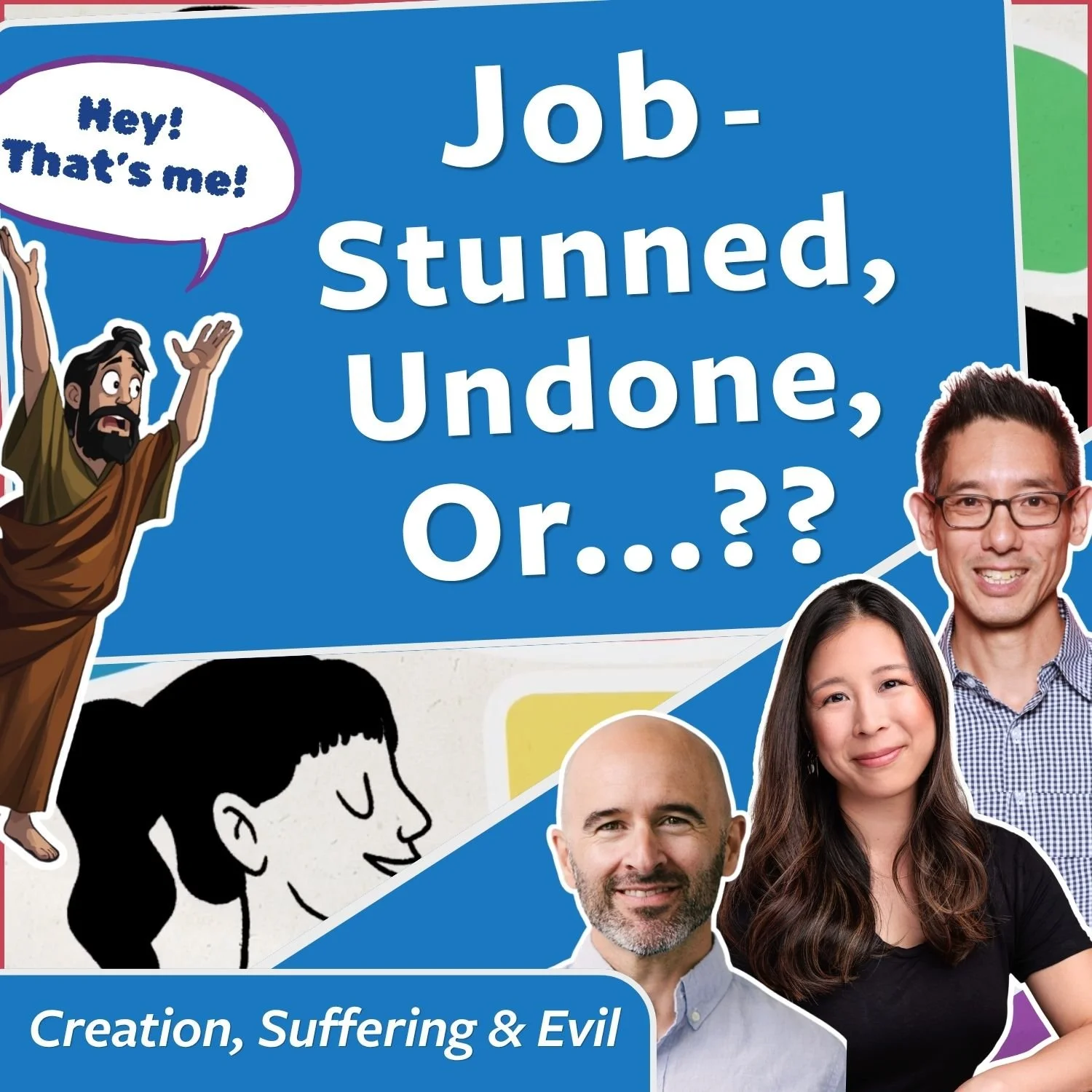
In this Beyond Simple Answers episode Scott, Greg, and Kristin explore the Bible, suffering, creation, and the problem of evil in passages like Philippians 2, the book of Job, Lamentations, and the stories of Hagar and Gethsemane. Returning to previous discussions, they look back at Process and Liberation theology's themes of justice and noncoercive love, as well aa prayer. Why does Job accept God's response? How do believers hold together anger and faith? It's a human conversation, animated by a desire to believe, that looks at suffering, divine power, and faith -- and the many complexities that arise in between in these topics. Beyond Simple Answers episodes are part of Theology Lab. We aim at seeking out a theological vision when simple answers fall aren't enough. And the conversations are geared towards anyone who might be amidst processes like deconstruction and reconstruction of faith, or who just wants curiosity and thinking to play a more important part of your faith life. Thanks for giving some of your time to engage this. We really do appreciate that and hope it might be helpful in some way.
Listen Now
Description
In this Beyond Simple Answers episode Scott, Greg, and Kristin explore the Bible, suffering, creation, and the problem of evil in passages like Philippians 2, the book of Job, Lamentations, and the stories of Hagar and Gethsemane. Returning to previous discussions, they look back at Process and Liberation theology's themes of justice and noncoercive love, as well aa prayer. Why does Job accept God's response? How do believers hold together anger and faith? It's a human conversation, animated by a desire to believe, that looks at suffering, divine power, and faith -- and the many complexities that arise in between in these topics. Beyond Simple Answers episodes are part of Theology Lab. We aim at seeking out a theological vision when simple answers fall aren't enough. And the conversations are geared towards anyone who might be amidst processes like deconstruction and reconstruction of faith, or who just wants curiosity and thinking to play a more important part of your faith life. Thanks for giving some of your time to engage this. We really do appreciate that and hope it might be helpful in some way.
Resources
📚 Check out Kristin’s book, We Mend With Gold!
Find a local bookseller: https://tinyurl.com/MendwithgoldLocal
Amazon: https://tinyurl.com/MendWithGold
Generated Transcript
Scott Rice (00:00)
The focus of this episode is gonna be on our general reflections on the Bible ⁓ and the topics of creation, faith.
and suffering. here's the question I want to put out and this is going to be kind of open-ended conversation. ⁓ Is there anything within scripture like a passage, a story or a theme that resonates with what we've been talking about in this series for you? This can be anything that kind of like that raises new questions, hard questions or also passages and themes that you know help you move forward or you at least find somewhat helpful when thinking about
Problem of suffering in this world
Greg Fung (00:43)
yeah. the, all right, I'm going to continue my process, my budding process theologian stance here. So yes, my mind goes off into Philippians chapter two, verses six through 11. This is that famous, I think there's a fancy theological term, kenosis or something, I forget the word, but that little hymn in Philippians chapter two where it talks about how Jesus descends and therefore is exalted.
And for me, that really captures, from a process theology standpoint, that idea of, we've misunderstood power. We thought power was power to coerce power from the top. In fact, this little bit in Philippians two talks about power is actually from the bottom. You descend, you sacrifice, ⁓ even to the point of death. And that is where there's actual power. That's what real power in the universe looks like. And in fact,
Perhaps the restructure of the universe, the way the universe was created at some deep, deep level that we can't fully understand is based on this idea of real power. And so if we then view our theology through that lens as a process theologian, it kind of fits together
Scott Rice (02:01)
Can I put a question to you about that? So like, love, I really love this idea. I like it's an idea that I want to, like that I do believe and that I want to get into how I live my life and how I hope the world can be changed, which is in surprising ways is through the weakness of a non-coercive love. And I'm trying to, you know, kind of use that word weakness, but like provocatively.
Greg Fung (02:03)
Yeah, please.
Scott Rice (02:31)
I wonder though, how does that sit with you? How do you see that fleshing itself out with, if this is how God acts, what do you think that that means for the ways that we and Christian communities are meant to act and be hopeful for change?
Greg Fung (02:47)
⁓ Yes.
a major downside to this approach to power, which is it takes a really long time and you will probably never see the results. That's the downside of it. it's... so it was kind of dissatisfying. The upside is that you don't have to be a great historical character to affect change.
this approach to power, says that honestly, change can happen from anywhere because it is a sacrificial, is a weak form of power that ultimately, if this is really how the universe is built, it has this disproportionate impact. So the upside is, even though you may never see the impact, you can have an impact. And it allows, if we go back to this idea of the liberation theology, theodicy, it allows for more hope to press.
into small acts of change, into small acts of sacrifice locally that aren't working on a cosmic or a grand scale, but we believe, at least with this sort of theology in mind, we believe that it has an outsized impact and it's worth doing. So that's where I would pull those pieces together.
Scott Rice (04:04)
will just say, think the challenge of that for me is like, how much do I really believe that the way of the cross, like what happens with Jesus in the cross, if that is really kind of the undoing of the powers that be in the world and yes, there's resurrection that follows, like, like it seems like there's something deeply important that happens at the cross. Like how much do I, how much do I really trust, right? That that is, that is the way things should go. Howard Watt says this quote, right? He was just like, you know, listen, I'm a pacifist because
I think that the cross is the way in which God transforms the world. And that just like, I can't get that out of my head because it seems so ineffective, right? This is just like, this is not the way that I've been taught that power should work. but I'm compelled by it. I'm compelled, like I'm drawn to it.
Greg Fung (04:42)
Mm-hmm.
Kristin T. Lee (04:51)
Yeah, besides really appreciating that image of she's descending and the cross, I do think it puts an interesting tension with liberation theology, right? Because liberation theology is all about trying to counteract evil and not just, not that you're saying we submit to it, but it is about just in practical terms, like community organizing and organizing for power and change. So I think that's an interesting tension that that raises.
Greg Fung (05:22)
Yeah. I I resonate that. I would add, I can't decide if this is just a theological take or this is kind of whipping out and being unwilling to use levers of power because I'm uncomfortable with it. And so this is a nice theological way to justify that stance. I don't know. I could go either way and I see what you mean that.
sometimes, and there many historical precedents where the exercise of coercive power was necessary to do justice. And so I don't quite know how to balance that, it's a reality that's out there.
Scott Rice (05:59)
Kristen, how about you? What in scripture resonates with you or brings up questions? What are you thinking?
Kristin T. Lee (06:07)
Yeah, I think ⁓ the scripture passages that helped me make sense of suffering and evil are Lamentations for sure that that was like one of the only books the Bible could read for several years of my life actually but also Job It as a budding protest Theologian no, I'm not but
I do I do really resonate with job and how real he is in the face of real
suffering. And it's so interesting to me that the story starts with God letting Satan take away all this stuff from Job's life, including his own children, which that's just, that's a lot. Gosh, like, why, right? Like, why are you letting Satan mess with Job that much? But I appreciate that Job is so real, like he curses the day he was born. And so even though we see these glimmers of real faithfulness and integrity where he's like,
The Lord gives and the Lord takes away, may the name of the Lord be praised. Right. So there's like this real faithfulness there, but there's also real like anger and bitterness. Like I should have just died in my mother's womb. Right. And so I think he I think what I appreciate about him is not only does he name those real pains, but he continues to be in relationship with God through it. Right. He has a contentious relationship with God in some ways like he's angry. ⁓
but he doesn't ⁓ he doesn't turn away from God or like Greg mentioned in a previous episode, like he doesn't replace God with like idols where he's like trying to free himself of this pain through other means. He stays in relationship with God. And I find that to be a really helpful model for how we can sit in our grief and pain.
Scott Rice (07:56)
I love that Job is the model of the protest theologian and that there's faith from beginning to end and there are depths of despair all along the way.
Kristin T. Lee (08:07)
Mm-hmm.
Scott Rice (08:08)
Job's high on my list as well, I think for a lot of the reasons that you've just said. I have been reading, ⁓ the person I mentioned, either at beginning of this episode or last episode.
Gustavo Gutierrez and his commentary on And I don't know how it holds up in terms of like, you know, what scholars on Job are saying right now, but he brings out these points about the journey that Job goes on.
And the end, the end of the book is just amazingly
bewildering. it's right like Job is humbled by what God says. God kind of calls Job out and yet he says that Job is spoken correctly. That's also like those two components. I just didn't think this is remarkable. Right.
I mean
you get to the end you think okay maybe Job really has like kind of pushed it too far. And in one sense before God he's he he kind of falls down.
And yet, then God affirms him, absolutely affirms him, and then does not affirm his friends. ⁓ my goodness, this is...
a comment for the side, but I love the Old Testament for the ways in which the complexity of the stories... when I was younger, would be like... And I think I was kind of told and formed this way to love the New Testament and be like, okay, you can kind of distance yourself from the Old Testament, even if that was that subtlety. And I can't help but feel like...
the things we're talking about in this series I think, well, they actually match a lot of the experiences that I see more happening within the Old Testament, not everywhere and every place, Job in Proverbs makes a really interesting conversation,
but there's something
very powerful about the end of that book.
Greg Fung (09:41)
Yeah, because Job, he accepts it. Right? God calls him out. He says, who are you? Were you there when I made all these things? And Job's like, no, you're right. And he's surprisingly okay. He doesn't really push back after that. And I've never fully understood that. I mean, it feels like there's something to this idea of just having God address him and be with him.
is enough, even though the suffering of that moment hasn't ended. mean, later on in the epilogue, yes, it does. But in that moment, he's still scratching his sores with clay shards and his kids are still, I mean, dead. You know, it's a mess, but it was enough that God responded in some way. that's, mean, remarkable to me. Is that true for me? I don't know. I have to think about that. But it got me thinking about Job and his acceptance of it.
Kristin T. Lee (10:28)
Yeah.
Yeah, I also, I find God's response a little bit unsatisfying, which increases my respect for Job because God comes in after Job's like so raw with his pain. And then God comes in he's like, who are you? Did you create the heavens and the earth? Did you invent the eagles wings, you know, all this stuff. And I'm just like, God, like obviously not. Why are you asking him rhetorical questions? He's suffering, you know, like.
Greg Fung (10:49)
Mm.
Kristin T. Lee (10:56)
It feels almost like God's pulling out his, I don't know, God card ⁓ and just being like, I'm God, you're not, you don't understand, ⁓ which feels a little bit like it could lack compassion. yet, Greg, like what you said, Job accepts it. And as I was reading the passage,
Greg Fung (11:03)
Mm-hmm.
Kristin T. Lee (11:17)
he says something about how now I have seen you and you've turned me into dust and ashes. And so then I'm like, ⁓ there is this something about this
real encounter with God that silences Job. So I'm like, there's something there.
Scott Rice (11:32)
What
does he see? this is, mean, Kristen, have, Gutierrez brings this out. like, and this is where I'm not sure, Gutierrez says things that I'm not sure are there in the text, but he's like, he makes you think that, that he least puts a compelling interpretation on the idea that like whatever Job sees in that
is almost like what we will see when suffering ceases. And then we will think differently about the, not in a way that justifies like the suffering of the world.
but we will see something that's so good that it has some kind of good effect.
Now, is that what happens at the end of Job? I'm not sure. I'm not sure Gutierrez is right about that, but there's certainly themes in the Bible that there's a vision of what is to come that will make us different. And I don't know how much more to say than that.
Kristin T. Lee (12:23)
Yeah, yeah, maybe it's just seeing the glory of God, right? And being speechless in the face of your own humaneness and that glory. I'm not sure.
Scott Rice (12:35)
Can I say one more thing about the God card idea? Because I think that that's like, it's just a genuine, that's an honest observation. I feel that as well. And I was thinking like, you know, I wanna make sure I read the book of Job alongside my favorite passage in the Bible, which is the golden calf account in Exodus 32. And that is where, right, you've got God steaming down the mountain to do away with God's people in Moses. Moses is just as Moses reminds God of the covenant God's made. You know, there's just, and there's this,
famous rabbinic interpretation where it says like, only see the full face of God when you see Moses and God together there. When you see Moses reminding God of who he is. And there it's like, Moses brings out the God card. And I say that to say like, I always want to make sure I'm reading Job alongside the golden calf account. And it adds helpful complexity, maybe creates a good...
conversation or argument to be had about what is the way forward in having an intense prayer life with God.
Kristin T. Lee (13:42)
That's actually how I was, as I was wrestling with how do I reconcile that, those hard parts of Job for me. ⁓ I actually think it's reading scripture in totality. Cause for me, the corollary, yours is the golden calf. For me, it's reading Hagar's story and seeing how God sees her so specifically and sees her pain so specifically and meets her in the desert. So much so that
she names God Elroy, I'm probably pronouncing that wrong, right? Like God sees me. And so like, even though it seems like in Job, God's kind of ignoring his suffering, or kind of just pulling the God card in Hagar, it's totally different. It's a very personal interaction there.
Scott Rice (14:26)
Let me put in just kind of one other factor here as we're thinking about the Bible. Obviously, though, it's something that has, I think, a lot of power in the conversations we've had. I think the kind of the prayer of Gethsemane up to the death of Jesus and the gospel accounts and just like really succinctly, the significance that God in flesh, God with us, is experiencing the suffering of the world.
And there's a whole lot to say here, right? In of theologically, scripturally, what's going on, but is experiencing the suffer of the world into the point of saying, let this pass if it's possible. And then to the point of death, you have the protest of God, God protesting God's own self. And then also alongside the claim,
Kristin T. Lee (15:10)
Mm-hmm.
Scott Rice (15:14)
into your hands, I commend my spirit. Protest and trust.
existing alongside one another. I mean, there's so much there, but I'll say like, God with us, and that God present in the midst of suffering, and also with the hope, right, that this will not be the end. There is a way, there's gonna be a way forward that God makes through death to something better. That doesn't answer every question. The problem of suffering remains, no doubt. ⁓ But there's deep significance, I think, you know, for me, I'm guessing for many of us, in that story of God entering into the depths of suffering and pain.
Greg Fung (15:48)
And for better, for worse, it touches on an earlier theme we had around prayer, especially for process theologians, prayer seems to be diminished because if God can't or won't move the way we want, then why pray? But in these passages, Hagar, Job, ⁓ the golden calf, it feels that the answer is God's presence more than some outcome, some measurable KPI that
shows that God is powerful or is good. just, God says I'm here and that's the answer to prayer, which is usually not the answer to prayer that I look for, but maybe I should.
Scott Rice (16:32)
Christian Gregg, I think we're at a good place to bring this conversation to a close. And then we will go into our final episode, which is just to say, where are you on this question of why does God create this world? What gives you hope and what questions remain? So if it's okay with you, we'll look at those in our final episode and wrap up this series.
Kristin T. Lee (16:52)
Sounds great, thank you.
Greg Fung (16:53)
Thanks all.
Scott Rice (16:56)
Till next time.